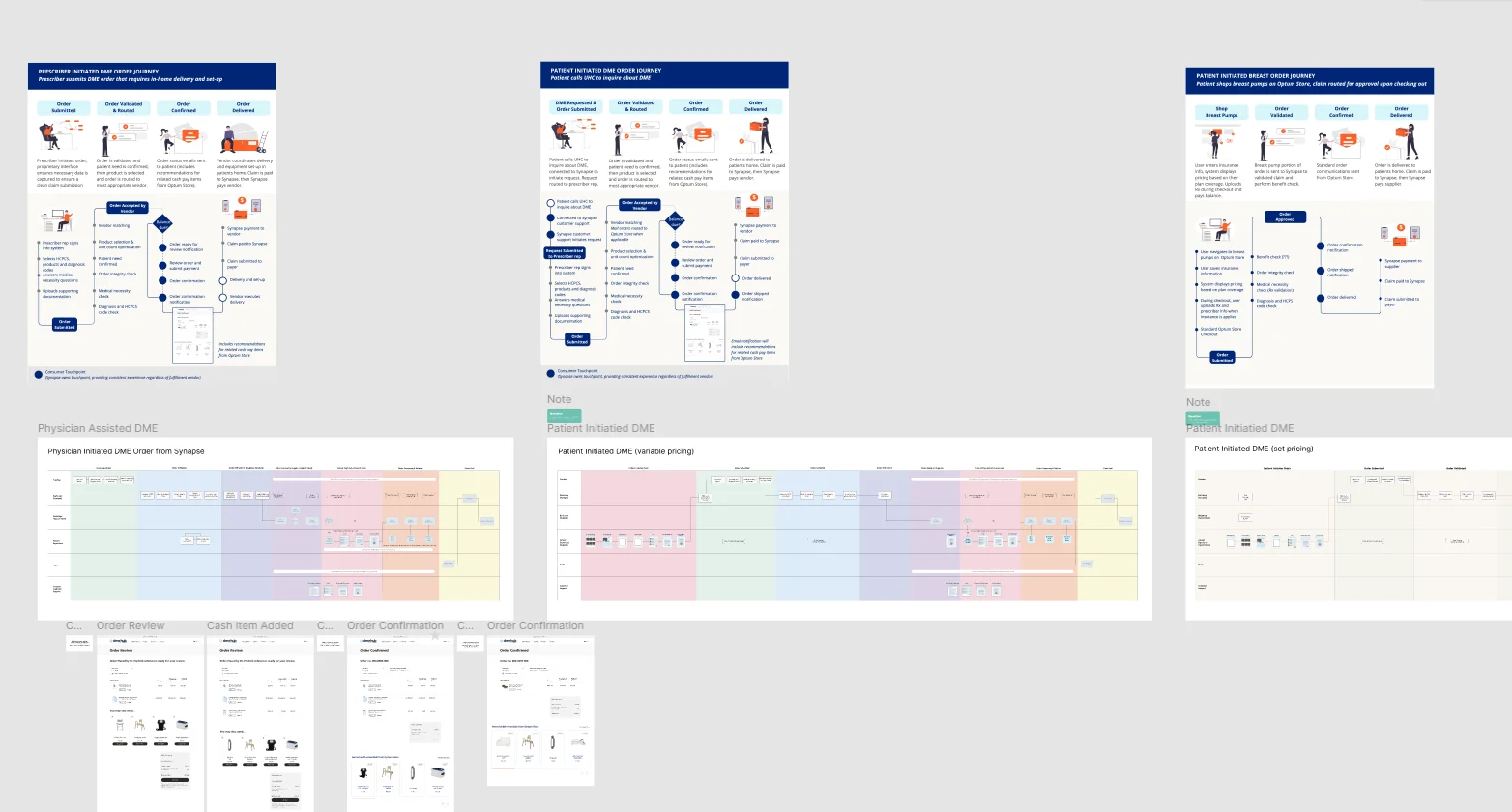
User-journey mapping
Meeting with our VP and Product Owner, we learned what the expectations were and how the customers would find their needs, its fulfillment, and what the end-purchase experience would be.

Enterprise · E-commerce · Optum Store
I led design work on a new e-commerce funnel that supported insurance coverage on parental products, this required new composition ideas not previously seen.
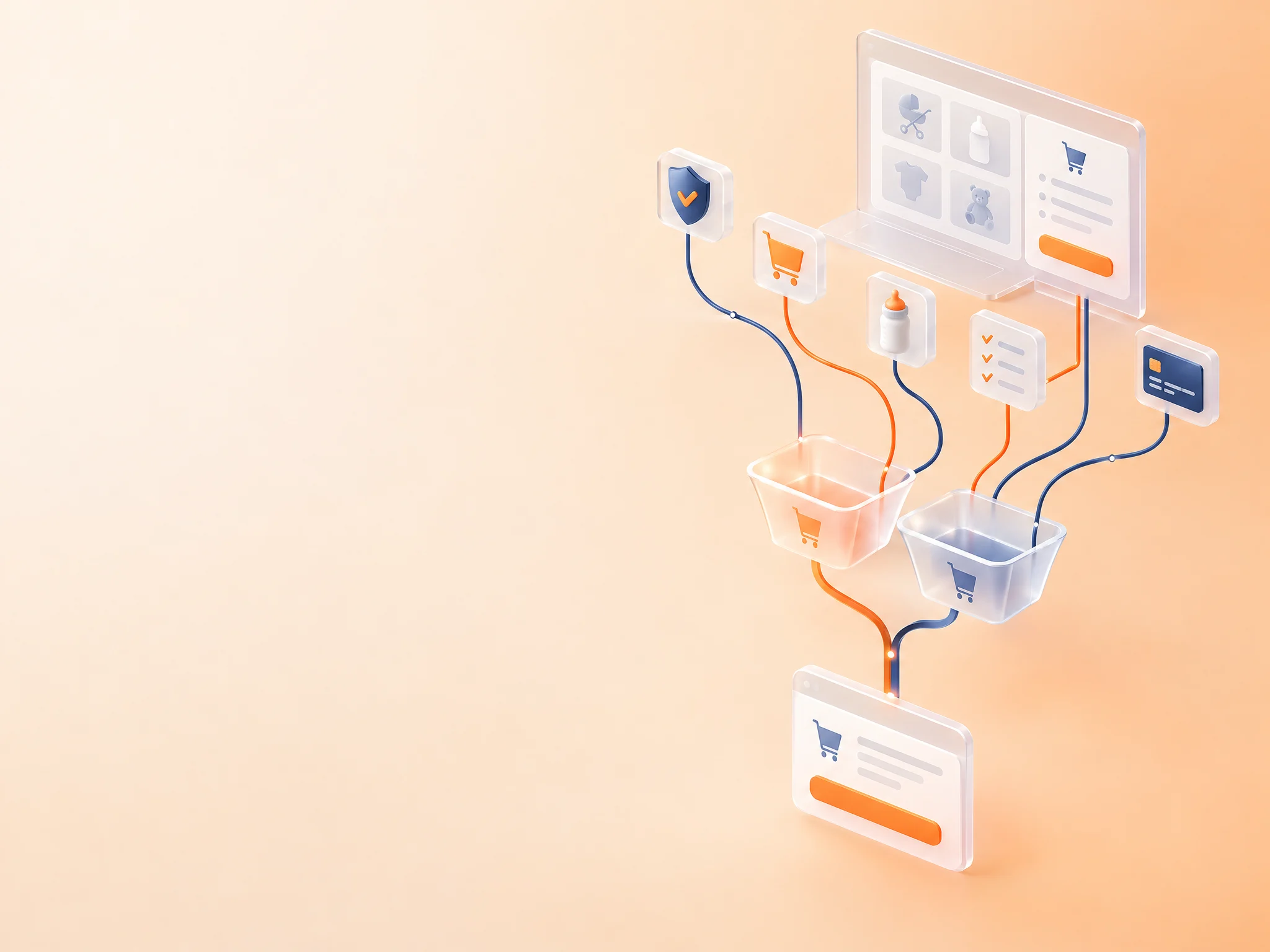
Make coverage shoppable. Keep checkout simple.
Experience at a glance
The original device composition shows where parents need to go: prioritize their needs, show the product options, then take the complexities of insurance coverage into a seamless purchase.
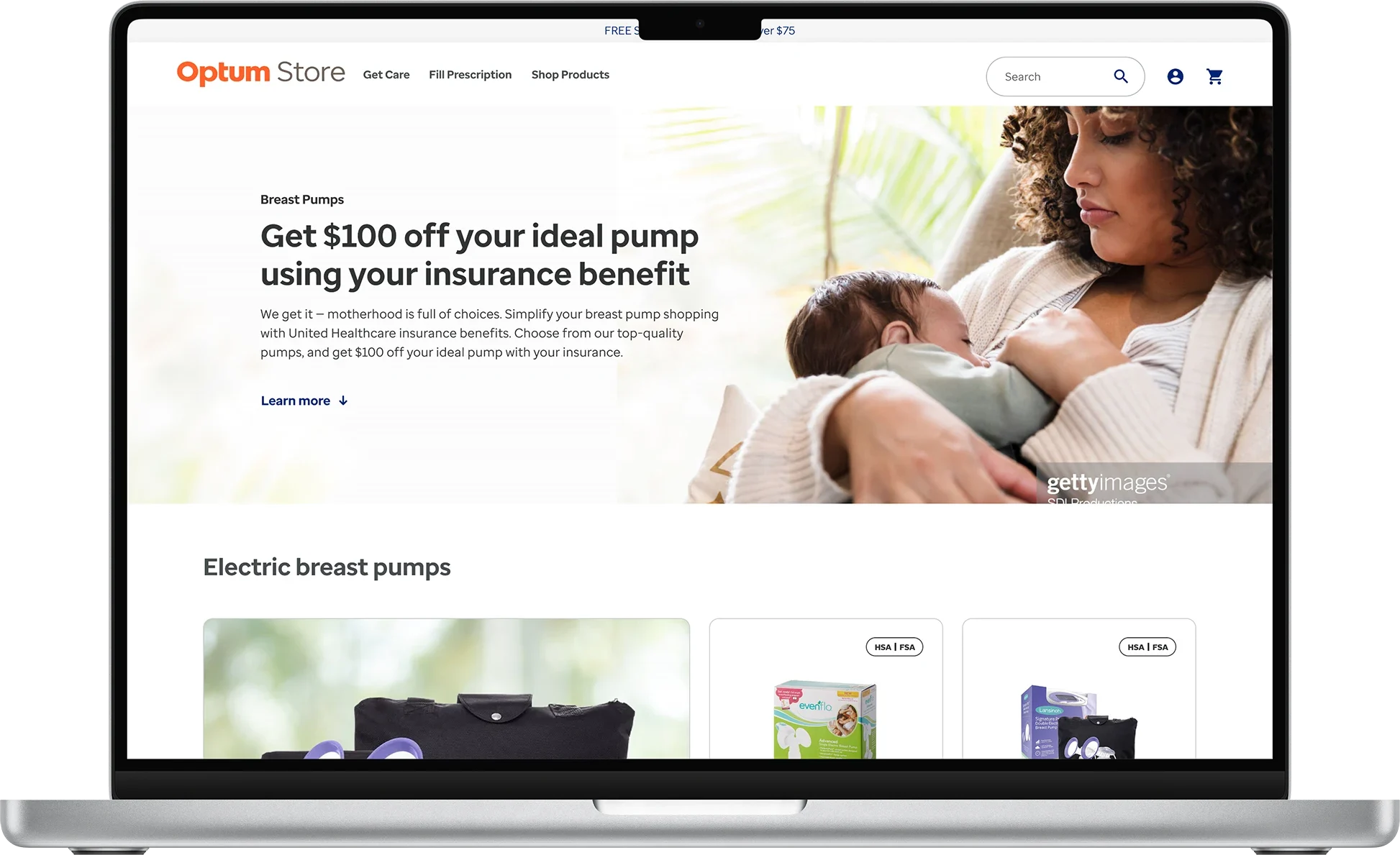
Case study summary
Want to talk through the decisions behind this work, or a similar challenge on your team?
The Vice President of Product & Design secured a partnership with Synapse, bringing in a wide range of Durable Medical Equipment (DME) to Optum Store. As the UX team’s specialist in complex systems, I helped design an intuitive user-flow while maintaining a rigid design system.
Team
4 people, 2 teams: 1 UX architect, 1 product owner, 1 UX director, 1 VP, outsourced development team.
Duration
2 months
Tools
Figma, Photoshop, Illustrator, Jira
Methods
Information architecture, design system, personas, usability testing, A/B testing, rapid prototyping, design review.
The challenge
This was Optum Store’s first insurance coverage integration in e-commerce, in addition to supporting a sizable vendor. Expanding financing capabilities on top of expanding product offerings was a layered challenge that needed strong interaction model while remaining accessible to customers.
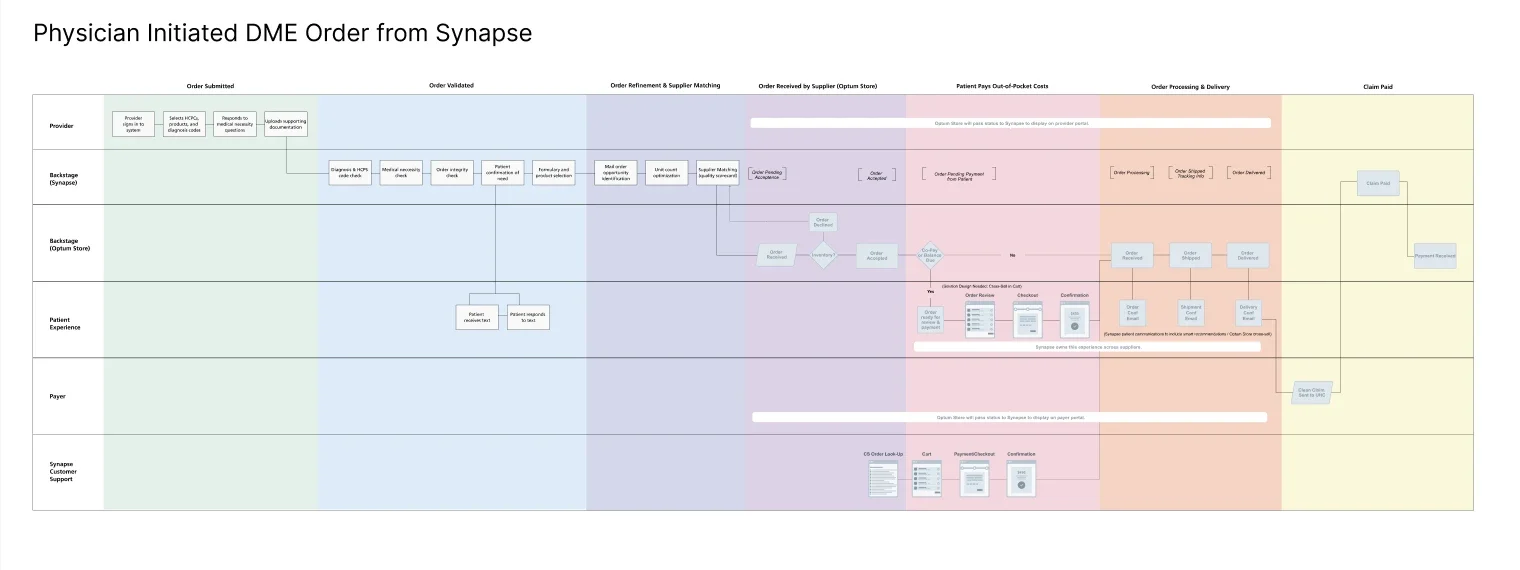
Partnered with the talented product owner, Mark Tremblay, we were able to translate requirements from VP, Sarah Jellison, we were able to meet on how we could translate previous efforts from the Checkout system and my prior work on the Affordable Insulin initiative to support this funnel. Initial work went in tandem to finalizing negotiations with Synapse. We would meet weekly to showcase and get approval with Synapse stakeholders to ensure their products and user flow were represented well in product, finance, and legal requirements. At the same time, I would meet with my Senior Director, Ingvald Smith-Kielland, and colleague, Vanessa Khan, to ensure my use of the design system and visual assets were up to company standards.
Early research was a partnership between our Vice President and Synapse stakeholders to understand where Optum Store sat in conjunction with the Synapse supply. Later efforts involved determining what old designs can be used and what became net-new for the product class.
Meeting with our VP and Product Owner, we learned what the expectations were and how the customers would find their needs, its fulfillment, and what the end-purchase experience would be.
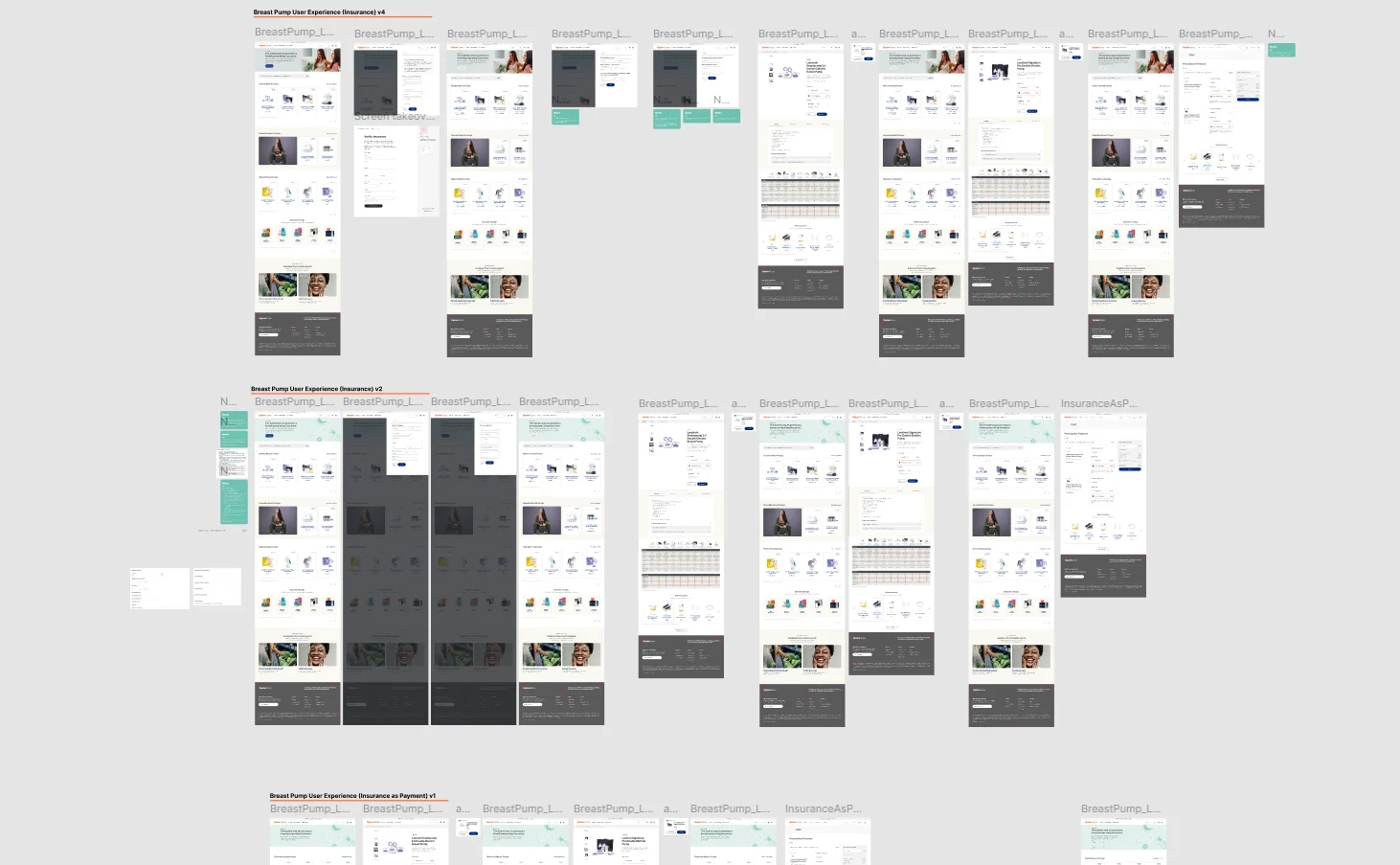
Due to the speed in which this feature needed to be integrated, it necessitated revisiting old work and following patterns of adherence to standards. This also allowed development to reuse capabilities in code.
Leveraging my learnings of managing converging influences from earlier public initiatives, like Affordable Insulin, plus moreso the speed and complexity of work in Caesars Sportsbook, I was able to lead the project comfortably to completion.
After the completion and successful launch of the Durable Medical Equipment funnel for Optum Store, our brand evolved to become what is Optum Now.
My final contribution to the team came in the form of a project that was called OneCheckout. The goal of this project was to innovate on the experience of our Checkout system to go beyond best of class. As of this writing, a number of those planned innovations have already been adopted by the likes of Shopify. Other explorations could not be explored further.